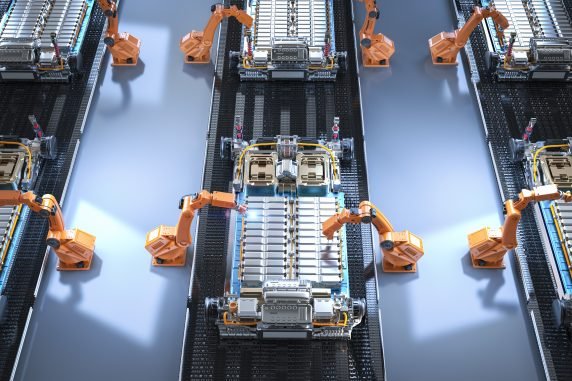

The manufacturing industry is in the midst of a profound transformation, moving from traditional production lines to intelligent, interconnected smart factories. This shift, often called Industry 4.0, is driving a global market that is projected to reach an estimated $747.4 billion by 2030, fueled by the widespread adoption of technologies like the Industrial Internet of Things (IIoT), artificial intelligence (AI), robotics, and data analytics.
While Wi-Fi and legacy wired connections have served their purpose, they fall short of meeting the rigorous demands of a fully automated, data-intensive factory floor. They struggle with interference, offer inconsistent coverage, and lack the low latency required for mission-critical applications. This is where private 5G networks emerge as the game-changer, providing the foundational infrastructure to unlock the full potential of the next-generation smart factory.

Why Private 5G is the Backbone of the Smart Factory
A private 5G network is a dedicated, localized wireless network built for a specific organization, like a manufacturing plant. Unlike a public network, it uses licensed, shared, or private spectrum and is customized to meet the unique operational needs of the facility. The benefits it offers are transformative, addressing the very limitations that have held back widespread IIoT adoption.
- Ultra-Reliable Low-Latency Communication (uRLLC) The most critical advantage of private 5G is its ability to deliver ultra-reliable low-latency communication. With latency as low as a few milliseconds, it enables real-time, instantaneous communication between machines, robots, and control systems. For applications like remote-controlled robotics, automated guided vehicles (AGVs), and closed-loop process control, this near-instantaneous response is non-negotiable. A slight delay could lead to a production error, a safety hazard, or a complete halt in the assembly line. Private 5G provides the assurance of connectivity that mission-critical systems demand.
- Massive Machine-Type Communication (mMTC) A smart factory is a hive of activity, with thousands, even millions, of connected devices—from sensors monitoring vibration and temperature to smart tools and wearable devices for workers. Wi-Fi networks can become congested and unreliable when faced with such a high density of devices. Private 5G, designed with massive machine-type communication in mind, can connect an unprecedented number of devices per square kilometer, ensuring that every sensor, camera, and machine has a dedicated and stable connection, all without performance degradation.
- Enhanced Security and Data Privacy In an era of rising cyber threats, securing proprietary manufacturing data and intellectual property is paramount. A private 5G network operates as a closed, isolated network, separate from the public internet. This intrinsic security provides manufacturers with granular control over who and what connects to the network, and where the data is stored and processed—often on-premise at the network’s edge. This significantly reduces the attack surface, protects sensitive operational technology (OT) from external threats, and ensures compliance with strict data regulations.
- Unmatched Flexibility and Scalability Manufacturing environments are dynamic. Production lines are often reconfigured to meet changing market demands or to introduce new products. Wired networks are rigid, costly, and time-consuming to reconfigure. Private 5G, being wireless, provides unparalleled flexibility. Machines and robots can be moved and re-deployed without the need for rewiring, dramatically shortening changeover times and enabling a more agile and responsive factory layout. Moreover, the network can be scaled up or down effortlessly, accommodating the addition of new devices and applications as the factory evolves.
Powering Next-Gen Use Cases with Private 5G
The adoption of private 5G is not just about improving existing processes; it’s about enabling a new generation of use cases that were previously impossible.
- Autonomous Mobile Robots (AMRs): AMRs and AGVs navigate the factory floor, transporting materials and finished goods. Private 5G’s low latency and ubiquitous coverage allow them to communicate with a central control system in real-time, safely avoiding obstacles and optimizing their routes, even in complex or expansive facilities.
- Predictive Maintenance: IoT sensors on machinery constantly collect data on performance, temperature, and vibration. This data is transmitted over the private 5G network in real-time to an edge computing platform. AI algorithms analyze this data, predicting potential equipment failures before they occur, triggering maintenance alerts, and preventing costly unplanned downtime.
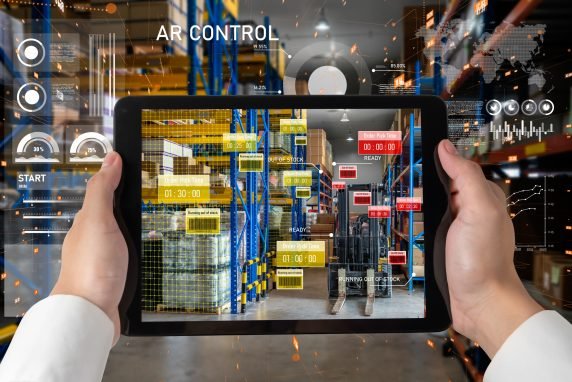
- Augmented Reality (AR) for Worker Assistance: AR headsets and smart glasses can overlay digital instructions, schematics, and performance data onto a worker’s field of view. This enables remote expert assistance for complex repairs or guided assembly. Private 5G’s high bandwidth and low latency ensure the smooth, uninterrupted streaming of high-resolution video and data, providing a seamless and effective user experience.
- Real-Time Quality Control: High-resolution cameras and computer vision systems, connected via private 5G, can inspect products on the assembly line for defects. The high-volume video data is processed at the edge with AI, allowing for real-time defect detection and immediate removal of faulty items, ensuring zero-defect manufacturing.
The ARi Global Solutions Advantage
At ARi Global Solutions, we understand that deploying a private 5G network is more than just installing hardware—it’s about creating a holistic, intelligent ecosystem. As a leader in Integrated Engineering, Industrial Automation, and Digital Transformation, we offer a comprehensive suite of solutions to help manufacturers navigate this journey. We work closely with clients to design, deploy, and manage tailored private 5G networks that integrate seamlessly with their existing IT and OT infrastructure.
Our expertise spans from initial network design and planning to full-scale implementation, system integration, and ongoing support. We ensure that the private 5G backbone not only meets current connectivity needs but also serves as a future-proof foundation for continuous innovation. By partnering with ARi, manufacturers can confidently embrace the full potential of Industry 4.0, transforming their operations, boosting productivity, and gaining a significant competitive edge in the global market. The smart factory is no longer a concept—it’s a reality, and with private 5G, its power is now within reach.