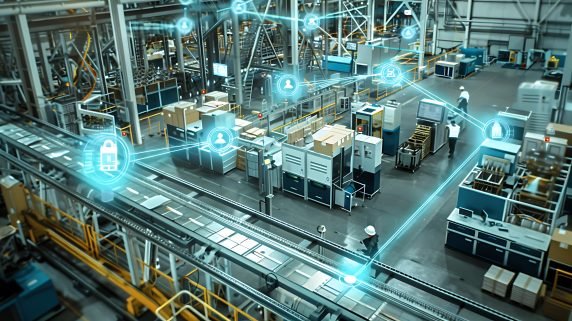
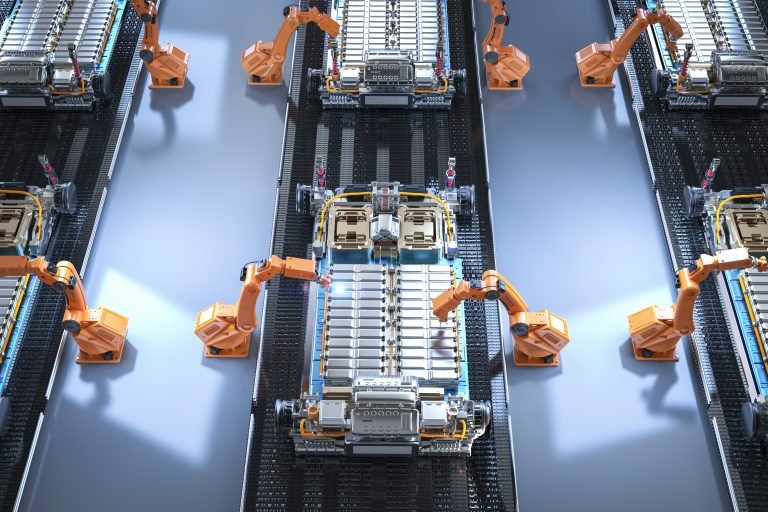
The digital twins have become the new era of manufacturing in the current age, which happens to be a fast-changing manufacturing environment. It remains radically altering in the area of theoretical prototypes and is vital to the skill of production lines on the start and end. With the development of the active virtual models of the physical systems, manufacturers are able to simulate, optimize and innovate dynamically in real-time which becomes able to discover significant efficiency gain and competitive advantages never seen before. In the case of many developed companies, the adoption of digital twins that run whole production lines is an objective that is a necessity. That is what the industry titans are undertaking to renegotiate the meaning of the excellence in manufacturing.
Why Scale Digital Twins? Between Concept and Core Strategy.
The history of the digital twins and how it has evolved into the complex interactive and AI-powered systems that can reproduce all the characteristics of the production is a miracle. It is projected that the worldwide market on digital twins will continue to increase by 24.48 billion in 2025, 24.48 billion in 2025 to 259.32 billion by 2032, compound annual growth rate of 40.1%. The leading factor in the development of this sector is the irresistible power of the technology to address urgent problems in the manufacturing industry:
- Predictive Maintenance: Digital twins: Digital twins utilize real-time sensor data to predict equipment failures, which decreases unexpected downtimes along with maintenance expenses by up to 30 percent.
- Process Optimization: During the working process, manufacturers run simulation of what-if to optimize workflows, resource utilization, and energy usage, contributing to the efficiency increase of 15 to 20.
- Product Lifecycle Management: Design to deployment Digital twins allow smooth collaboration, speed up time-to-market, and guarantee quality compliance.
For example, using Amberg Electronics Plant of Siemens, the digital twins are now used to visualize the production processes, and this has led to 30% flexibilities in manufacturing and 20% increments in productivity. Another instance involves an example of a digital twin that has been used in a metal fabrication plant to optimize the process of scheduling production batches that enabled reduction of costs and stabilization of yield.
Practical Applications: What Opportunity Mastery Makes Capable.
To realize the optimum potential of digital twins, the wires and gizmos approach focuses on the various use cases during the production lifecycle.
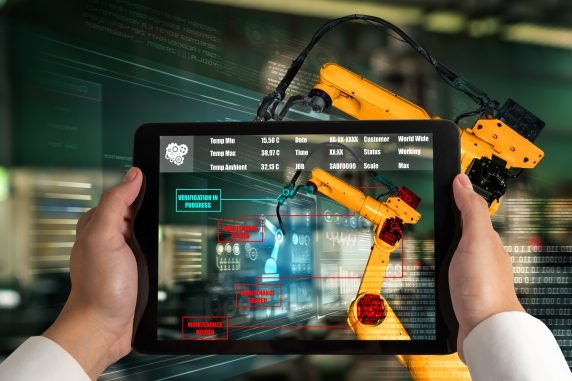
Predictive Maintenance: Digital twins identify equipment malfunction in real time and ensure it does not turn into an overall system failure. An illustration of it is proactive detection of wear and tear caused by vibration and temperature sensors must intervention in the reduction of downtime. 25% of the wasted time is eliminated.
Production Planning and Scheduling: Digital twins collaborate with ERP systems in emulating production stages. This will allow real-time adaptations to the production process depending on the demand.
Quality Control and Compliance: Virtual replicas are subjected to intense testing to reduce defects to the minimum and be completely in compliance with the regulations. As an example, pharmaceutical firms receive 20% faster outcomes in digital twin batch testing than traditional approaches.
Human-Centric Operations: Sophisticated digital twins include human considerations such as worker safety and ergonomics. An example is the Simatic RTLS solution created by Siemens that applies the concept of digital twins to track the movement of employees and optimize the workplace design to ensure safety and efficiency.
Human Aspects of Sustainability of AI and HCD.
The emergence of the new trends is supported by the revolutionization of the digital twin’s future:
- Machine learning models are optimizing the operations of the digital twins automatically as the algorithms enhance the predictive analytics of the AI and Generative AI models. Generative AI will save on cost and development time through increased scenario testing and model generation.
- Stated by the World Economic Forum, 57 percent of those companies that had attained an average 16 percent decrease in carbon emissions invest in digital twins to enhance the sustainability indicators. Ikea is one such example, and it used digital twins on digital twins to cut HVAC energy use in its various facilities by 30 percent.
- Connection and edge computing with low lag time enables real time data combining, enhancing the settling and reactivity of digital twins.
- Digital twins are going to be useful in augmenting the industry 4.0 more through autonomous decision-making as they develop firmly, as they will allow self-optimized production lines with minimum human involvement.
Addressing Implementation Problems.
To scale up digital twins, it is necessary to consider data security, complexity of integration, and workforce preparedness:
- Data Security: Data Sensitive operational data must be carefully encrypted and accessed with access control.
- Legacy System Integration: Most plants use proprietary systems that cannot communicate. Architectures such as unified namespace (UNS) can be used to fill these gaps.
- Skill Gaps: Training and engagement with experts is essential in developing internal capabilities.
The Digital Twin Mastery of ARi Drives.
At ARi, we work with manufacturers to take digital twins to the level of the conceptual design and all the way to the full production lines. The following is what we may do:
- Digital twin strategies are customized to align with the operational objectives of the business. IoT, AI, and Cloud all come together seamlessly.
- Deployment is secure as legacy system integration, data pipelines, and cybersecurity are all taken care of.
- Digital twins are continuously refined and supported so they can be aligned with the production’s requirements.
The companies using our solutions have seen:
- 20-30% operational efficiency gains.
- Predictive maintenance resulted in 25% reduction of down-time.
- 15-20% less resources and energy consumed.
Conclusion
The art of integrating production-lines with digital prototypes is a difficult one to master. With the increased interconnection of data and systems and the use of digital twins, the pressure to keep up with the competition increases. Being the partner of ARi, you will be able to take the confidence that you should adopt our transformational technology to enhance all aspects of the business.
Take the first step today. Contact ARi to discuss how your production line can be transformed with the help of digital twins.