Automation & Robotics have come a long way from their early days on production lines to now playing a vital role in design studios. This evolution has transformed engineering, enabling more precise, efficient, and innovative processes. The industrial robotics revolution unleashed by Industry 4.0 is shaping the future of manufacturing, regardless of concerns about robots taking over jobs.
As labour costs rise, even highly industrialized nations are leading the charge, with developing countries following suit. China has already recognized this trend, investing heavily in robotics. According to GlobalData, the robotics industry is expected to surpass $500 billion by 2030, a significant leap from the $45.3 billion generated in 2020.
The integration of robotics in engineering has profoundly transformed both the industrial and creative sectors. This blog delves into the journey of robotics, tracing its evolution from the assembly lines of factories to the innovative spaces of design studios, and highlighting its impact on the engineering landscape.
- The Industrial Revolution of Robotics:
- Early Adoption in Manufacturing:
In its early stages, robotics was primarily employed in manufacturing to enhance efficiency and precision. Robotic systems were integrated into industries such as automotive and electronics to perform repetitive and hazardous tasks, significantly improving production speed and safety. The first industrial robot, introduced in the early 1960s, was initially capable of only basic pick-and-place operations. However, advancements soon allowed robots to perform tasks like welding, assembly, painting, and final inspection. These technological improvements led to massive productivity gains without compromising quality.
Let’s have a closer look at these case studies for better insight:
One notable milestone in robotic development occurred in 1978 with the creation of PUMA (Programmable Universal Machine for Assembly) by Vicarm and Unimation, with support from General Motors. Initially used in assembly lines, PUMA remains a valuable tool for robotic researchers today.
Toyota has long been a leader in incorporating robotics into its manufacturing processes. By using robotic arms for precision tasks like welding and painting, Toyota has significantly increased production efficiency and safety. Their approach has also minimized defects, leading to higher quality vehicles and customer satisfaction.
- Advancements in Automation:
Technological advancements have propelled robotics from performing simple, repetitive tasks to handling complex processes that require a high degree of precision. The integration of AI & ML has been a game-changer, allowing robots to adapt to new tasks and environments.
These advancements enable robots to optimize production by adapting to real-time data, ensuring precision and efficiency. AI-powered systems can predict maintenance needs before issues arise, reducing downtime and preventing costly disruptions. This predictive maintenance capability, combined with the ability to perform complex tasks with high accuracy, significantly enhances overall productivity in manufacturing. The integration of AI in robotics not only streamlines operations but also paves the way for more innovative and resilient manufacturing practices.
- Robotics in Production Lines:
- Efficiency and Precision:
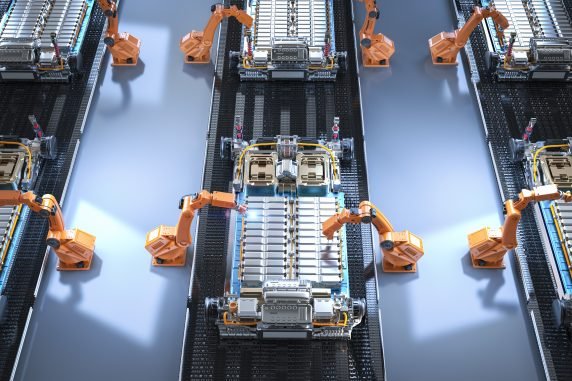
Robotics enhance efficiency and precision in various industries. In automotive assembly, robots perform tasks like painting and welding with consistent quality and speed. Electronics manufacturing benefits from robots assembling circuit boards and soldering components with micron-level accuracy, reducing errors. In pharmaceuticals, robots handle packaging, sorting, and compounding medications, ensuring sterility and high standards.
These applications showcase how robotics streamline production, maintain high accuracy, and improve product quality across sectors, leading to greater productivity and reduced operational costs. Integrating robotics into production lines revolutionizes manufacturing processes, making them more efficient and reliable.
- Economic Impact:
The economic benefits of robotics in manufacturing are substantial, including cost reduction, increased output, and improved ROI. However, the rise of robotics also raises questions about job displacement and the need for a workforce skilled in robotics and automation technologies.
The integration of robotics in production lines significantly boosts economic efficiency by reducing labour costs, minimizing errors, and increasing productivity. Robots enhance precision and speed, leading to higher quality products and fewer defects. This technological advancement enables industries to scale operations, meet growing demands, and maintain competitive edges, ultimately driving economic growth and fostering innovation across various sectors.
3. Transition to Design Studios
- Robotics in Product Design:
Robotics are no longer confined to production; they are now integral to the product design phase. Robotic systems in design studios assist in prototyping, testing, and refining new products, enhancing the accuracy and efficiency of the design process.
The integration of robotics with Computer-Aided Design (CAD) and Computer-Aided-Manufacturing (CAM) systems has revolutionized product design. This synergy enhances design precision by allowing robots to execute intricate details and modifications directly from CAD models. It speeds up the development cycle by automating repetitive tasks and reducing the time from concept to prototype.
Robotics in design studios enables rapid iteration, greater customization, and the creation of complex designs that were previously difficult to achieve, ultimately improving innovation and efficiency in the design process.
- Innovative Applications:
Cutting-edge applications of robotics in design studios are pushing the boundaries of creativity and functionality. Generative design, where AI-powered robots generate complex design options based on set parameters, and rapid prototyping, where 3D printing robots create physical models quickly, are just a few examples.
Leading design studios and tech companies are leveraging robotics and CAD/CAM integration to innovate and maintain competitiveness. For example, firms like Tesla use robotic arms for precise 3D printing and prototyping, accelerating product development. Design studios such as IDEO utilize robotics for rapid iteration and complex design tasks, allowing for greater creativity and efficiency. These innovative applications demonstrate how cutting-edge technology drives progress and sustains a competitive edge in a rapidly evolving market.
4. The Synergy of Human and Robotic Collaboration
- Enhancing Creativity:
Robotics can augment human creativity by taking over repetitive and mundane tasks, allowing designers to focus on ideation and innovation. Collaborative robots, or cobots, work alongside human designers, enhancing their capabilities and productivity.
In design environments, collaborative robots (cobots) enhance creativity by facilitating seamless interaction between humans and machines. Cobots are designed to assist rather than replace humans, allowing for dynamic teamwork where robots handle repetitive tasks and support intricate processes.
This collaboration streamlines workflows, accelerates prototyping, and fosters innovation by enabling designers to focus on creative aspects while robots handle routine operations. This synergy of human creativity and robotic precision creates a more dynamic and productive workspace, pushing the boundaries of design possibilities.
- Future Trends:
The future of robotics in engineering looks promising, with trends indicating increased collaboration between humans and robots, more advanced AI integration, and further miniaturization and specialization of robotic systems.
Emerging technologies like AI and advanced sensors are enhancing robots’ capabilities, enabling them to perform more complex tasks with greater autonomy and precision. This evolution promises unprecedented innovation and efficiency in design and manufacturing processes. Robots will increasingly collaborate with humans in intricate tasks, accelerating prototyping and customization.
As robotics technology advances, it will unlock new possibilities, driving forward a future where creativity and efficiency converge to redefine industry standards.
The Future:
The evolution of robotics from production lines to design studios represents a significant milestone in engineering. This transformation not only enhances efficiency and precision but also opens new horizons for creativity and innovation. As robotics continue to evolve, their integration into both manufacturing and design processes will undoubtedly lead to groundbreaking advancements, solidifying their role as a cornerstone of modern engineering practices.
Explore the future of automation and robotics with ARi. Discover how our cutting-edge solutions can optimize your operations and drive innovation. Contact us today to start transforming your business!