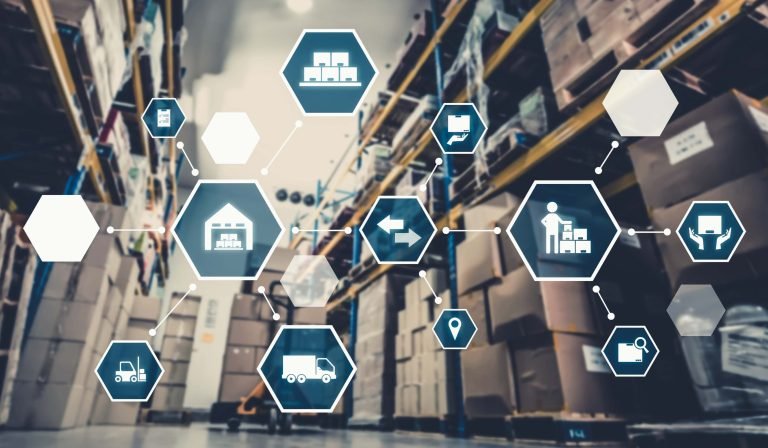
In the fast-paced world of commerce, successful logistics coordination is the invisible engine driving products from production to customers, often serving as the lifeblood of business. Imagine an environment where every supply chain hiccup, delay, and inefficiency impact the financial bottom line. This underscores the critical importance of logistics in the modern economy. This is where simulation becomes invaluable, providing a robust method to model, analyse, and enhance supply chain and logistics operations.
Traditionally, optimizing logistics relied on trial and error, a costly and time-consuming approach. However, with the rise of sophisticated simulation software, businesses can now create virtual models of their supply chains. These models replicate real-world scenarios, allowing companies to identify potential bottlenecks, test different strategies, and optimize routes before real-world implementation. This proactive approach minimizes disruptions, reduces costs, and ensures a smooth flow of goods, ultimately propelling businesses towards greater efficiency and profitability.
Join us as we explore the top 10 must-have logistics solutions for streamlined operations and how simulation can boost efficiency, reduce costs, and drive innovation in supply chain and logistics.
1. Automation & Robotics:
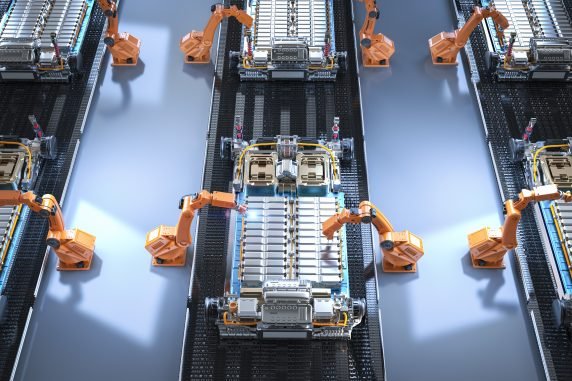
Warehouse automation technologies streamline processes, improving production and accuracy. AS/RS, Conveyor Systems, Robotic Picking Systems, and others reduce labour costs, increase throughput, and enhance customer satisfaction, revolutionizing warehouse operations.
Robots automate tasks, ensuring safety, and boosting productivity, and companies like Amazon Robotics, Ocado, DHL, and JD.com utilize them for efficient delivery and logistics transformation.
2. Predictive Analytics:
Logistics organizations use data analytics to analyse historical sales data, market trends, and other factors to enhance decision-making, streamline operations, and boost productivity. This aids demand forecasting, route optimization, inventory control, supplier analysis, risk management, and customer insights, providing a competitive advantage and improving customer satisfaction.
This enables data-driven decision-making, reduces lead times, facilitates proactive problem-solving, optimizes inventory management, enhances resource allocation, improves transportation planning, and boosts customer service.
3. Real-Time Tracking:
Imagine having complete transparency over your entire supply chain, from the moment a raw material leaves the supplier to the instant it arrives at your customer’s doorstep. That’s the power of real-time tracking solutions.
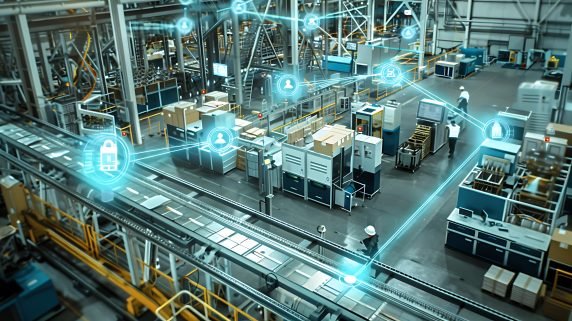
Real-time tracking solutions continuously monitor assets, vehicles, or items using GPS, RFID, barcode scanning, telematics, IoT, and mobile applications for precise location, status, and condition data.
This empowers you to make informed decisions, optimize operations, and ultimately deliver a superior experience for both you and your customers.
4. Automated Inventory Management Systems:
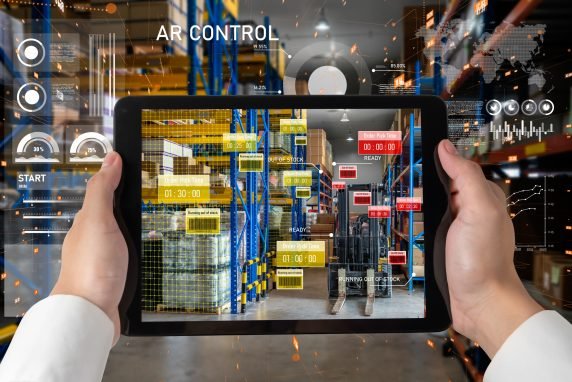
Automated Inventory Management systems are sophisticated software programs that leverage RFID and barcode scanning technologies to streamline inventory management. These systems enable order fulfilment, warehouse management, demand forecasting, real-time inventory tracking, data integration, reporting, analytics, and alerts.
By enhancing visibility, accuracy, and efficiency throughout the supply chain, these technologies reduce costs and increase customer satisfaction.
5. Omni Channel Distribution Strategy:
An Omni Channel Distribution Strategy streamlines logistic operations by integrating various sales channels (online, offline, mobile, etc.) into a cohesive system. It optimizes inventory management, order fulfilment, and customer service, leading to faster deliveries, reduced costs, and improved customer satisfaction. Centralized data and flexible fulfilment options enhance efficiency across the supply chain, creating a seamless experience for both businesses and customers.
6. Warehouse Management Systems (WMS):
From a warehouse management perspective: Efficient operations are crucial for businesses to enhance processes, reduce costs, and deliver value to customers. Encouraging a culture of ongoing enhancement, establishing clear goals, optimizing procedures, allocating resources wisely, integrating technology, managing inventory effectively, nurturing supplier relationships, ensuring quality, training staff, and mitigating risks are essential strategies.
These approaches not only ensure long-term survival and sustainability but also enhance competitiveness and elevate customer satisfaction by offering much greater value.
7. Reverse Logistics Optimisation:
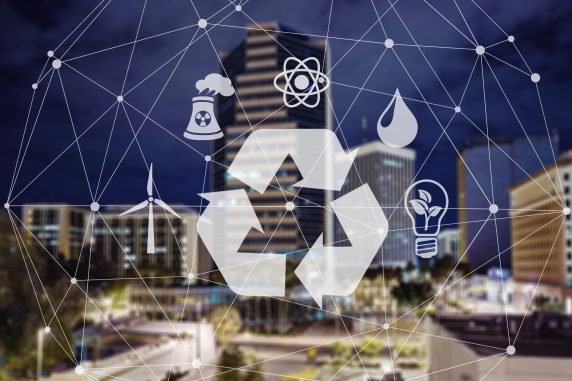
Reverse logistics optimization enhances logistics operations by improving the efficiency of product returns, repairs, and recycling processes. It minimizes costs, reduces waste, and maximizes asset recovery through streamlined workflows, better inventory management, enhanced communication with customers, and utilization of data analytics, resulting in a more efficient and sustainable logistics system.
8. Blockchain Technology:
Blockchain technology streamlines operations by providing a decentralized, transparent, and immutable ledger for recording transactions. It eliminates the need for intermediaries, reduces costs, increases efficiency, ensures data integrity, and enhances trust in various processes such as supply chain management, identity verification, and smart contracts, fostering streamlined operations.
9. Sustainable supply chain practices:
Sustainable supply chain practices in logistics solutions focus on environmentally responsible and socially beneficial methods across the supply chain. This includes eco-friendly sourcing, efficient transportation, energy conservation, waste reduction, and sustainable packaging. Collaboration with suppliers to improve sustainability, integrating advanced technologies for transparency and efficiency, and promoting a circular economy is essential.
These practices aim to minimize environmental impact, enhance resource efficiency, ensure ethical standards, and meet regulatory requirements. By prioritizing sustainability, businesses not only reduce costs and risks but also contribute positively to the environment and society, fostering long-term resilience and competitive advantage in the global marketplace.
10. Last-Mile Delivery Solutions:
“Last-mile delivery,” the final phase of logistics, involves transporting products from a distribution centre to the customer. This process is influenced by factors such as weather, parcel theft, delivery density, traffic congestion, address accuracy, delivery windows, customer availability, returns, and sustainability.
Addressing these challenges requires collaboration, technology, and innovative solutions like drones, autonomous vehicles, and crowd shipping to enhance efficiency and customer satisfaction.
In conclusion, navigating the complexities of today’s supply chain demands both efficiency and innovation. While efficient logistics are the backbone of any successful business, leveraging simulation technology unlocks a world of possibilities. By creating virtual models of your supply chain, you can explore “what-if” scenarios, identify potential bottlenecks, and test new strategies in a risk-free environment. This proactive approach empowers you to optimize routes, minimize delays, and ensure a smooth flow of goods. Ready to unlock the full potential of your supply chain? Look no further than Ari Services. Our team of logistics and supply chain simulation experts can guide you through the process, helping you achieve peak efficiency and gain a competitive edge in the ever-evolving marketplace. Contact ARi Services today and take your supply chain to the next level.