
Manufacturing companies continue to face headwinds. In 2024, the industry will have to embrace new technologies and trends to tackle ongoing challenges like a shortage of skilled labor, supply chain disruptions, the need for innovation to meet net-zero emission goals, and more. To scale up production, enhance competitiveness, and capture the full potential of capital, companies have to be forward-thinking and pursue digital transformation objectives.
According to a recent study by Deloitte, 86% of manufacturing executives believe that smart factory solutions will be integral to driving competitiveness in the next five years. Manufacturers also expect significant gains from the industrial metaverse and will embrace generative AI and other advanced technologies to boost various facets of manufacturing. Whether it’s product design, aftermarket services or supply chain marketing, technology will help streamline processes, reduce costs, and improve resilience and agility.
Top 10 Manufacturing Trends that Will Shape the Industry Further
1. Smart Factories
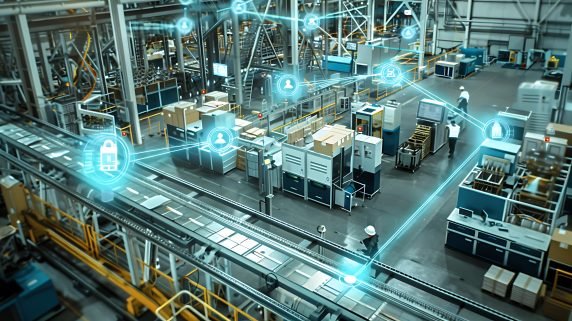
This is part of Industry 4.0, which employs technologies like IIoT, Big Data, AI, Advanced Analytics, and Machine Learning to transform operations and shop floors. As per a recent study, 83% of manufacturers think that smart factory solutions will revolutionize the way products are made in the coming 5 years. It will offer real-time insights, complete visibility, and scalable solutions. Plus, other benefits like asset efficiency, labor productivity, and better product quality at a cost reduction will lay the foundation for the industrial metaverse. It will also accelerate new product access and enhance supply chain collaboration, safety, and sustainability.
2. Predictive Maintenance
Large plants lose up to 323 production hours a year, resulting in a loss of $172 million annually. Predictive maintenance can reduce costs by 40% and downtime by 70%, increasing machine life by 20% to 40%. The pressures of a shutdown are accelerating the implementation of Predictive Maintenance in most large-scale manufacturing companies. For instance, Airbus is an early adopter of the trend and helps airline customers implement techniques of advanced predictive maintenance in partnership with GE. It helps anticipate part failures in aircraft and perform timely replacements and repairs to enhance safety and profitability.
3. Digital Twins
It’s a highly valued technology that saves money continuously building physical prototypes or running machinery to facilitate tests using simulation software. Just like the entertainment or media industry uses virtual models in its sets or CGI and animation, digital twinning empowers manufacturing companies to use virtual representations of objects to improve their decision-making with the help of data-driven simulations. It can be used to simulate the effect of supply and demand fluctuations on the assembly line’s output, analyze the dimensions of a new product or create a simulation of a piece of equipment on the factory floor. Above all, it helps business leaders make informed decisions on production and access product quality before they invest in physical assets.
4. 3D Printing / Additive Manufacturing
Many manufacturers are using 3D printing solutions to print their parts in-house and move ahead of supply chain delays in fact nowadays, industrial-sized 3D printers have made it possible to print an entire house in less than 24 hours. 3D printers produce jigs and fixtures in-house, saving ample time and money. 3D printing also makes molding, metal casting, and short-run production possible. For instance, Pankl Racing Systems, a company that manufactures mechanical systems used for planes and cars, uses 3D printing for custom jigs. It was 12x cheaper and 48x faster than the conventional CNC machined jigs. This trend is highly popular in the metal fabrication industry and is expected to grow at a CAGR of 19.5% till 2028, increasing in value to $ 11.6 billion.
5. Sustainable Manufacturing Practices
Across the world, the manufacturing industry emits one-fifth of all carbon emissions. Adopting sustainable practices can help build public trust, increase efficiency by lowering waste and promise long-term business viability. Dalmia Cement was the first company in the sector to announce its pledge towards carbon neutrality in 2018. They aspire to reach net-zero carbon by the year 2040 and have been making a significant transition to electric vehicles. The business also plans to run on 100% renewable energy by 2030.
Focus on ESG goals and pursuing carbon-neutral practices will be more prominent in 2024.
Manufacturers are increasingly adopting eco-friendly initiatives, such as using renewable energy, reducing waste, and optimizing resources, to minimize their carbon footprint and mitigate environmental impact.
6. Intelligent Automation and Robotics
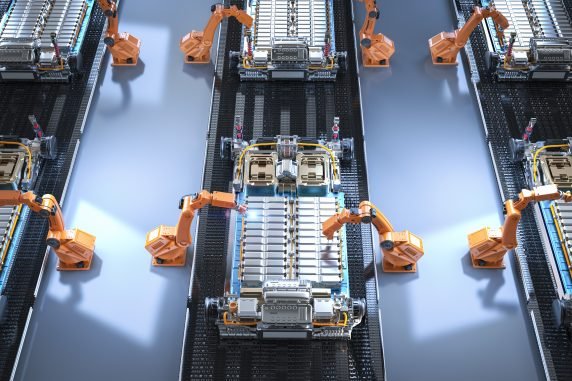
Advancements in hardware and software have led to the evolution of robotics in the industry. Whether it’s highly specialized robots or collaborative robots, aka cobots, they work along with human employees and contribute to enhanced productivity and precision. Cobots also help maintain safety standards and the collaborative approach opens new possibilities for agile or flexible manufacturing processes. In terms of automation, it can help reduce and streamline repetitive tasks while allowing the human workforce to focus on creative and complex roles. By integrating automation and robotics, companies can reduce operational costs and increase efficiency.
7. Machine Learning & Artificial Intelligence
Machine learning algorithms help companies boost innovation in the workplace. They can analyze vast amounts of data, such as market trends, historical performances, and customer preferences. They also help identify patterns and generate new ideas faster and more effectively than humans can on their own. Generative AI helps analyze real-time data from equipment and sensors, detect anomalies, and indicate before a breakdown occurs. It’s a great big step to save costs and enhance operational efficiency. Also, industry leaders are now embracing the power of AI to generate insights on inventory management and optimize operations and strategies accordingly.
8. Advanced Data Analytics
IIoT and big data analytics allow manufacturing companies to use sophisticated algorithms and predict failures or breakdowns with excellent accuracy – before they occur. Data analytics also helps improve forecasting and spot any supply shortages in the production process before they affect the manufacturing line. Data analytics is known to help diagnostic, predictive, and prescriptive analysis in the industry to improve product reliability and customer satisfaction.
9. Augmented Reality & VR Extended Reality
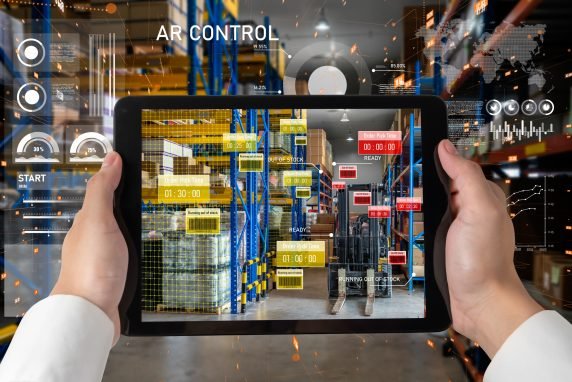
Employee training and skill development in the manufacturing industry have been revolutionized by AR and VR technologies. Virtual simulations offer a risk-free training environment, allowing the workforce to familiarize themselves with new and complex machinery or processes before they enter the production or factory floor. Also, AR facilities many real-time, hands-free guidance solutions for the repair and maintenance tasks in a factory setup. Technicians who are empowered with AR devices get access to instant relevant information and instructions, ensuring faster and more accurate problem resolution and lower downtime. VR also enables immersive design experiences and contributes to faster prototyping and product development cycles for manufacturing companies.
10. Digital manufacturing
Digital technologies are now a significant part of manufacturing – from design and planning to production and distribution. Solutions like Computer-Aided Design (CAD), Computer-Aided Manufacturing (CAM), and Product Lifecycle Management (PLM) systems help streamline workflows and accelerate time to market. It also enhances collaboration across the supply chain. Digital supply chain solutions ensure better visibility and bolster resilience. 76% of manufacturers that adopt digital tools in their manufacturing processes enjoy better transparency in the supply chain. Digital tools that promote remote assistance are also highly valued by manufacturers and leaders in the industry to ensure business continuity.
Companies can also consider setting up a micro factory – a small, modular, and tech-savvy structure that’s set up closer to customers to reduce shopping and storage costs. This highly automated digital manufacturing system can thrive with the adoption of IoT and robotics.
For many years, manufacturing companies have faced headwinds and dealt with several challenges related to globalization, supply chain management, workforce, finances, and management. Savvy companies are now embracing next-gen technologies and industry trends for factories, warehouses, and back offices.
At ARi Global Solutions, we have a wide range of services for the manufacturing and logistics industry to optimize operations and help you gain a competitive edge. If you want to make informed decisions and reach the highest levels of efficiency, we can help you adopt these trends with a forward-thinking approach.
Get in touch with our experts today!