The recycling industry has long been a cornerstone of global efforts to reduce waste, conserve resources, and combat environmental degradation. However, despite its critical role, the industry faces significant challenges, including inefficiencies, high labor costs, and contamination of recyclable materials. Enter automation and robotics—technologies that are poised to revolutionize the recycling sector, making it more efficient, cost-effective, and environmentally friendly.
In this blog, we’ll explore how automation and robotics are transforming the recycling industry and why this shift is essential for a sustainable future.
How Automation is Transforming Recycling
Automation refers to the use of technology to perform tasks with minimal human intervention. In the recycling industry, automation is being integrated at various stages of the process, from collection and sorting to processing and packaging. Here’s how it’s making a difference:
1. Automated Sorting Systems
One of the most significant advancements in recycling automation is the development of smart sorting systems. These systems use sensors, artificial intelligence (AI), and machine learning to identify and separate different types of materials with remarkable precision. For example, optical sorters can distinguish between various plastics based on their chemical composition, while magnetic separators efficiently extract metals from the waste stream.
Automated sorting not only increases the speed and accuracy of the process but also reduces the reliance on manual labor, which can be costly and inconsistent. By minimizing human error, these systems also help reduce contamination, ensuring that recyclable materials are of higher quality and more valuable in the market.
2. Robotics in Material Handling
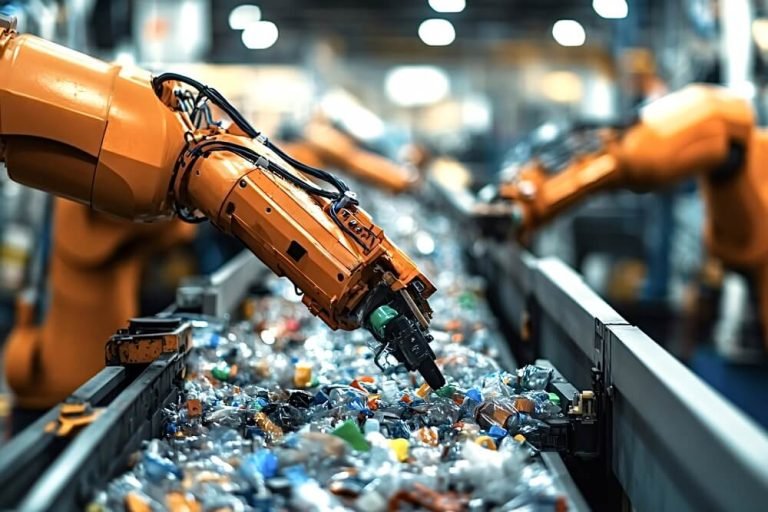
Robotics is another game-changer for the recycling industry. Robots equipped with advanced vision systems and AI algorithms can pick and sort materials with incredible speed and precision. For instance, robotic arms can be programmed to identify and separate specific items, such as aluminium cans or PET bottles, from a mixed waste stream.
These robots are not only faster than human workers but also capable of working around the clock without fatigue. This increases the overall throughput of recycling facilities, allowing them to process larger volumes of waste in less time. Moreover, robots can handle hazardous or bulky materials that may pose risks to human workers, enhancing workplace safety.
3. Smart Waste Collection
Automation is also being applied to waste collection, making it more efficient and environmentally friendly. Smart waste bins equipped with sensors can monitor fill levels and send real-time data to waste management companies. This enables optimized collection routes, reducing fuel consumption and emissions from garbage trucks.
In some cities, autonomous vehicles are even being tested for waste collection. These self-driving trucks can navigate urban environments, pick up trash, and transport it to recycling facilities without the need for human drivers. This not only reduces labor costs but also minimizes the carbon footprint of waste collection operations.
The Benefits of Automation and Robotics in Recycling
The integration of automation and robotics into the recycling industry offers numerous benefits, both for businesses and the environment. Here are some of the key advantages:
1. Increased Efficiency and Productivity
Automated systems can process materials much faster than manual methods, significantly increasing the productivity of recycling facilities. This allows businesses to handle larger volumes of waste and meet growing demand for recycled materials.
2. Improved Material Quality
By reducing contamination and human error, automation ensures that recyclable materials are of higher quality. This makes them more valuable in the market and more likely to be reused in manufacturing processes.
3. Cost Savings
While the initial investment in automation and robotics can be high, the long-term cost savings are substantial. Automated systems reduce labor costs, minimize waste, and increase the efficiency of operations, leading to higher profitability for recycling companies.
4. Enhanced Workplace Safety
Recycling facilities can be hazardous environments, with risks ranging from sharp objects to exposure to harmful chemicals. Automation and robotics reduce the need for human workers to perform dangerous tasks, improving overall workplace safety.
5. Environmental Benefits
By making recycling more efficient and effective, automation helps reduce the amount of waste that ends up in landfills or incinerators. This, in turn, lowers greenhouse gas emissions and conserves natural resources, contributing to a more sustainable future.
The Future of Recycling: A Fully Automated Industry?
As automation and robotics continue to advance, the recycling industry is likely to become increasingly automated. Future innovations may include fully autonomous recycling facilities, where every step of the process—from collection to processing—is handled by machines. AI-powered systems could further optimize operations, predicting trends in waste generation and adjusting processes accordingly.
However, the transition to a fully automated recycling industry is not without challenges. High upfront costs, the need for skilled technicians to maintain and operate advanced systems, and potential job displacement are all concerns that must be addressed. Policymakers, businesses, and communities will need to work together to ensure that the benefits of automation are shared equitably and that workers are provided with opportunities for retraining and upskilling.
Conclusion
Automation and robotics are transforming the recycling industry, offering solutions to some of its most pressing challenges. By increasing efficiency, improving material quality, and reducing costs, these technologies are helping to create a more sustainable and economically viable recycling sector.
While there are hurdles to overcome, the potential benefits are too significant to ignore. As we look to the future, embracing automation in recycling will be key to building a circular economy and preserving our planet for generations to come.
ARi’s Industrial Automation solutions help you achieve these goals. The time to act is now. By investing in automation and robotics, including ARi’s expertise, we can reform the recycling industry and take a giant leap towards a cleaner, greener, and more sustainable world.